
Lithium-Ion vs LiFePO4 Batteries: Which Is Best for Solar in Kenya?
Lithium-Ion vs LiFePO4 Batteries: Which Is Best for Solar in Kenya? By Top Heights Electricals & Solar | solar installers in Nairobi, Kenya | Growatt, Deye, Goodwe, Dyness and Victron If you are planning a solar system for your home or business in Kenya, the battery is one of the biggest decisions you will make. Walk into any solar shop in Nairobi and you will hear two names: lithium-ion and LiFePO4. Many people think they are two completely different things. They are not, and that confusion can cost you money. In this guide, our certified solar engineers explain the differences.
Top Heights Electricals · 2026-10-24
Lithium-Ion vs LiFePO4 Batteries: Which Is Best for Solar in Kenya?
By Top Heights Electricals & Solar | EPRA-licensed solar installers in Nairobi | Growatt, Deye and Victron
If you are planning a solar system for your home or business in Kenya, the battery is one of the biggest decisions you will make. Walk into any solar shop in Nairobi and you will hear two names: lithium-ion and LiFePO4. Many people think they are two completely different things. They are not, and that confusion can cost you money.
In this guide, our certified solar engineers explain the difference between lithium-ion and LiFePO4 (lithium iron phosphate) batteries, how they compare on safety, lifespan, cost and performance, and which one suits Kenyan homes and businesses.
What Is a Lithium-Ion Battery?
"Lithium-ion" is a family name. It describes any rechargeable battery where lithium ions move between the positive and negative electrodes as it charges and discharges. Your phone, laptop and most electric vehicles use lithium-ion batteries.
Within this family there are several chemistries, named after the material used in the positive electrode (the cathode):
• NMC (nickel manganese cobalt): common in electric cars, laptops and some home batteries
• NCA (nickel cobalt aluminium): used in some electric vehicles
• LCO (lithium cobalt oxide): common in phones and small electronics
• LiFePO4 (lithium iron phosphate): popular in solar storage, backup power and golf carts
So when someone compares "lithium-ion vs LiFePO4", they usually mean NMC-type lithium-ion versus LiFePO4. LiFePO4 is technically a type of lithium-ion battery, just with a different and more stable chemistry.
What Is a LiFePO4 Battery?
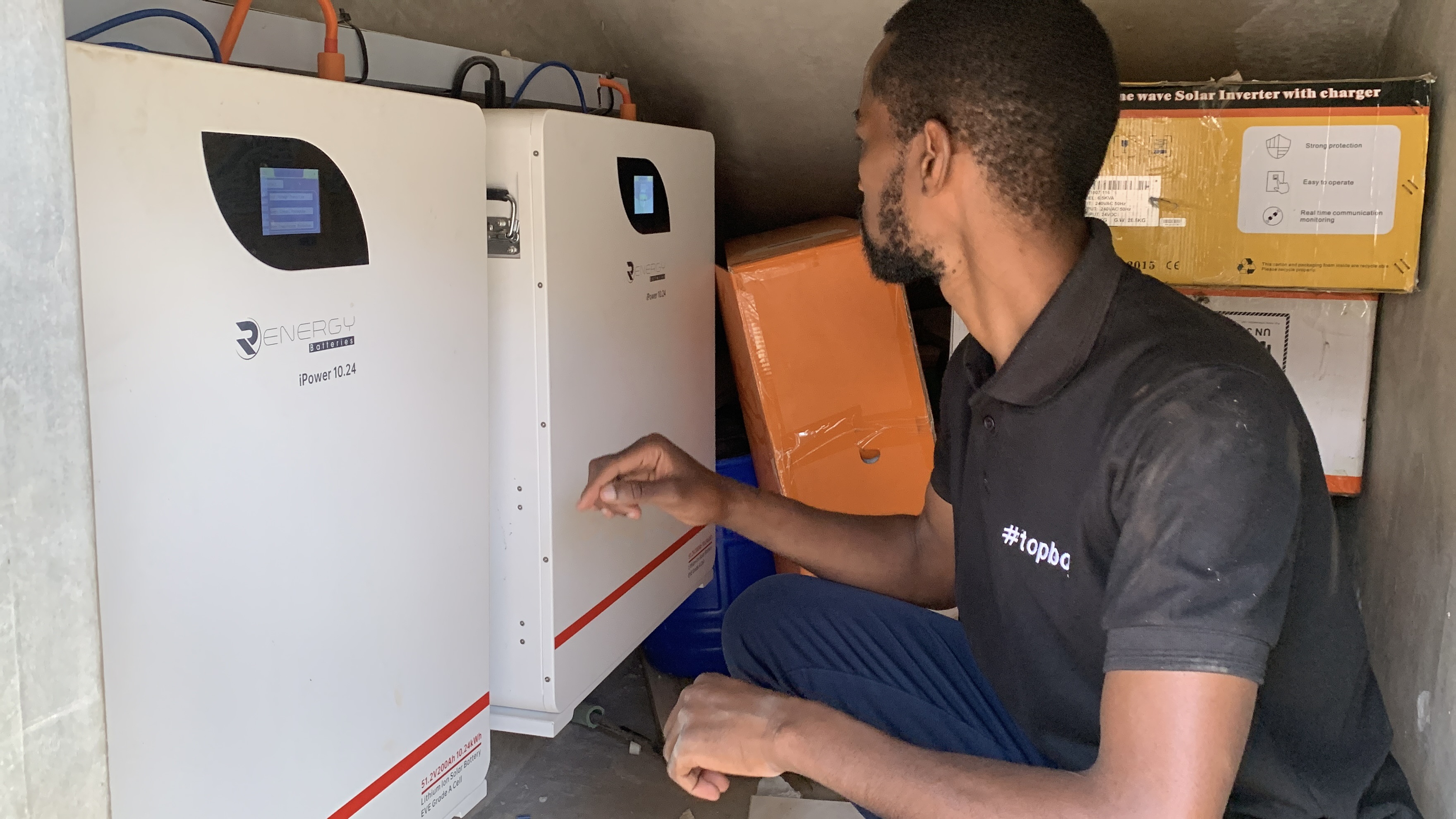
A LiFePO4 battery, also written LFP, uses lithium iron phosphate as the cathode material. It contains no cobalt or nickel. The iron-phosphate bond is very strong, which makes the battery more stable, safer under stress, and longer lasting than most other lithium chemistries.
This is why most modern solar storage products, including many batteries designed to pair with Deye, Growatt and Victron hybrid inverters, are built on LiFePO4.
Figures are typical industry ranges. Exact performance depends on the manufacturer, temperature, charge rate and how the battery is managed.
1. Safety: LiFePO4 Wins
Safety is the most important difference. NMC lithium-ion cells can enter thermal runaway if they are damaged, overcharged or overheated. This is a chain reaction where the cell heats up faster and faster and can catch fire.
LiFePO4 cells are far more thermally stable. They tolerate higher temperatures before breaking down, and they do not release oxygen as easily when stressed, which greatly reduces fire risk. For a battery installed inside a home, shop, school or clinic, that peace of mind matters.
2. Lifespan: LiFePO4 Lasts Much Longer
A battery's life is measured in charge cycles, one full charge and discharge. A solar battery cycles almost every day, so cycle life directly decides how many years you get.
• A typical NMC battery may deliver around 1,000 to 2,000 cycles.
• A quality LiFePO4 battery can deliver 3,000 to 6,000 cycles or more.
At one cycle per day, that can mean 8 to 15 years of service from LiFePO4, compared with a shorter life from other lithium chemistries. When you divide the purchase price by the total energy delivered over its life, LiFePO4 often has the lowest cost per kWh over time.
3. Performance in Kenyan Heat
Kenya's climate is generally kind to batteries, but installations in hot areas such as Mombasa, Kisumu, Garissa and Turkana, or in poorly ventilated rooms, can run warm. Heat shortens the life of every battery. LiFePO4 handles higher temperatures better than most other lithium-ion chemistries, so it is more forgiving of real-world conditions.
Wherever it is installed, any lithium battery should sit in a cool, dry, ventilated spot away from direct sunlight.
4. Usable Capacity and Power Delivery
A 10 kWh battery is not always 10 kWh you can use. Batteries are protected from being drained fully. LiFePO4 batteries usually allow a deep depth of discharge, often 80% to 100%, and hold a steady voltage while discharging. That means you get more usable energy and steady power for appliances like fridges, pumps, welding machines and lighting.
For comparison, traditional lead-acid batteries are usually limited to around 50% depth of discharge to avoid early failure, so a lithium battery gives far more usable energy per rated kWh.
5. Size, Weight and Upfront Cost
NMC lithium-ion has higher energy density, which is why it dominates electric vehicles and phones, where weight and space matter. For a fixed solar installation on a wall or in a rack, a slightly larger LiFePO4 unit is rarely a problem.
On upfront price, LiFePO4 costs more than lead-acid but has become competitive with other lithium options, and over its lifetime it usually works out cheaper. Prices change with the exchange rate and import costs, so ask for a current quotation.
Which Battery Is Best for Your Solar System in Kenya?
Choose LiFePO4 if you want:
• A home or business solar battery that cycles daily
• The safest option for indoor installation
• Low maintenance and a long warranty
• The best long-term value
• Reliable backup during Kenya Power outages and load shedding
Standard NMC lithium-ion makes sense when:
•Space and weight are the main limits, such as in portable devices or electric vehicles
For almost all residential, commercial and institutional solar installations in Kenya, LiFePO4 is our recommendation.
Why the Battery Is Only Part of the System
Even the best LiFePO4 battery will underperform if it is badly matched to the rest of the system. A good installation needs:
• A compatible hybrid inverter. Brands such as Deye, Growatt and Victron offer inverters designed to communicate with approved lithium batteries.
• A quality Battery Management System (BMS) that protects against overcharge, over-discharge, short circuits and overheating.
•Correct sizing based on your real energy use, not guesswork.
•Proper cabling, breakers and earthing to the correct standard.
•A licensed installer. In Kenya, solar installers should hold a valid EPRA licence.
Is LiFePO4 the same as lithium-ion?
LiFePO4 is a type of lithium-ion battery. The difference is the cathode chemistry. LiFePO4 uses iron phosphate, which makes it safer and longer lasting than NMC-type lithium-ion.
How long does a LiFePO4 solar battery last?
A quality LiFePO4 battery can last 3,000 to 6,000 cycles or more, which is often 8 to 15 years in daily solar use, depending on temperature, depth of discharge and how the system is managed.
Is LiFePO4 safe to install inside the house?
It is considered the safest mainstream lithium chemistry for home use. Safe installation still depends on a quality BMS, correct protection and a certified installer.
Is LiFePO4 better than lead-acid for solar?
For most users, yes. It lasts several times longer, gives more usable energy, needs no topping up or maintenance, and is lighter. The upfront cost is higher, but the lifetime cost is usually lower.
Can I connect LiFePO4 to my existing inverter?
Only if your inverter supports lithium batteries and is compatible with the specific battery model. Have a qualified technician check this before you buy.
Talk to Nairobi's Solar Battery Experts
Not sure whether to choose LiFePO4, or how big your battery should be? Top Heights Electricals & Solar designs and installs solar and battery storage systems for homes, businesses and institutions across Nairobi and Kenya.
Contact us today for consultation and quotation.